What we do
Nine things we do, roughly in the order a project needs them.
Who we work with
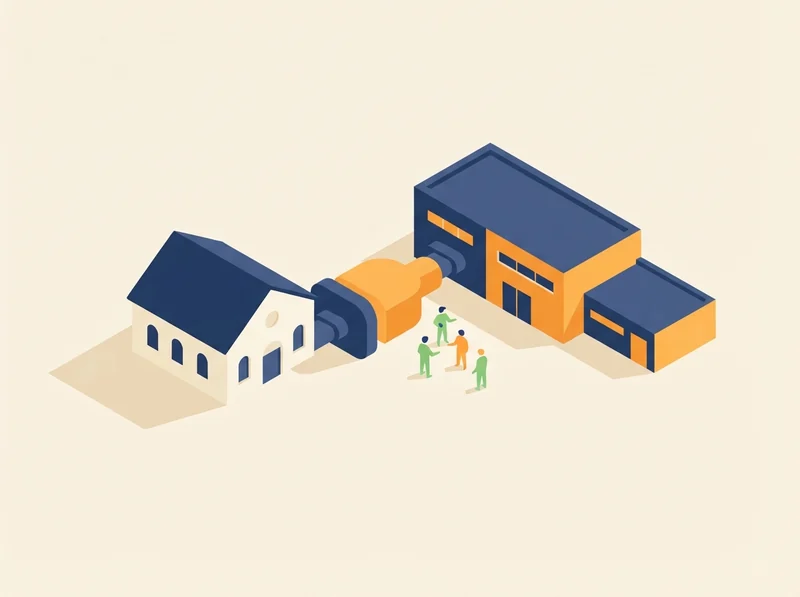
We run one process for both sides. Here is what it looks like from yours.
A clear, fair process for your community
For county and city leaders, planning and zoning boards, regional development groups, and residents facing a proposed data center.
- Find out which issues are still unresolved and up for discussion
- Set siting rules before any developer files an application
- Independent experts the community chooses, paid for by the developer
- Commitments that still apply years after the project opens
Approvals that hold up
For developers who want an approval that lasts and a community that accepts the project.
- Talk to the community before the project goes public, while trust is still possible
- Both sides agree on one set of facts instead of arguing over competing studies
- Promises with real follow-through, not forecasts people argue about
- Less risk of lawsuits, reversed votes and moratoriums
Understanding the conflict
Before any meetings, we talk privately with the people involved. We learn who is involved, what they want, and which disagreements are about facts and which are about values. Then we write up whether a joint process can work, and on which questions.
This step often gets skipped, and skipping it is why many efforts fail. Better technical studies cannot settle a disagreement about values.
Listening, and finding who people trust
We learn the community’s history, how it sees itself, what it wants to still be true in ten years, and who residents would actually trust to tell them the truth about a project. That is rarely the people at the microphone. Research on public comment is clear: people who speak at hearings tend to be older, more likely to own their homes, and more likely to oppose projects than the community as a whole. The number of comments is not public opinion, and we will never report it as if it were.
When a client needs to know what the public really thinks, we use a tool that can answer that: a survey of a representative sample, a randomly chosen panel, or a citizens’ jury. We report those results separately from what we heard in the room.
Better meetings
We design and run meetings that produce useful information, not just a transcript. That usually means replacing the open-microphone hearing with small facilitated groups, structured questions, and formats that fit the decision.
At the start of every meeting, we say which decisions are still open, which are already made, and why. Pretending people have influence they do not have is worse than holding no meeting at all.
One set of facts
When each side hires its own expert, the fight usually ends with two studies nobody believes.
Instead, both sides choose the questions together, pick the experts together, and agree on the method before any results come in. Agreeing to a method that might give an unwelcome answer is what makes the answer stick. Where the two sides still read the results differently, we write down the disagreement instead of hiding it.
Turning big claims into local questions
Almost nothing about data centers is true everywhere. The same 200-megawatt campus can have very different effects on water, noise, local taxes and power bills. It depends on the cooling design, the tax rate, the utility’s rates, the power grid, and how close the nearest bedroom window is. Both sides like national averages because averages hide these differences.
Often the most useful thing we do is turn a general claim into a question with an answer. Not “Do data centers use too much water?” but “How much water has this facility agreed in writing to use, and how does that compare with what this utility is permitted to supply and what it produces on its busiest summer day?”
Setting the record straight, in both directions
We keep a public, dated log of the claims we have checked, with findings and sources. Corrections that go against the developer and corrections that go against opponents appear on the same page, in the same format.
We are neutral on whether a project should be approved. We are not neutral on whether a claim is true. Treating a four-million-gallon figure and a forty-thousand-gallon figure as equally valid is not neutral. It is unhelpful.
Putting promises in writing
A promise that cannot be enforced is worse than no promise. The day it is broken, it costs more trust than it ever earned.
We help both sides turn good intentions into terms with numbers, ways to check them, and consequences. That includes “if this limit is passed, then this happens” commitments; money set aside as a guarantee instead of verbal assurances; obligations that pass to any future owner; paybacks if promised milestones are missed; and required checks after construction. We remove words like “reasonably,” “where feasible” and “best efforts” from every draft we touch. Each one is a loophole.
Follow-through after approval
The years after approval are where trust is really won or lost. We help set up yearly public reports, public tracking of commitments, agreed points that trigger renegotiation, and a way to settle disputes, all before anyone needs them.
Help where the community is stretched thin
Many communities do not have the staff or experts to keep up. We provide plain-language materials and technical help, and we help find and support trusted local voices. We also push for independent experts, chosen by the community and paid for by the developer, as a condition of approval. That is not taking sides. It is what a fair process needs when one side has far fewer resources.
Your side of the table
Each of these steps works a little differently depending on which side you are on.
Start a conversation
Tell us where the project is, who is involved, and how far along it is. A short call is usually enough to see whether we are the right fit.
nathan@commonwatts.com