What we do
Nine things we do, roughly in the order an engagement needs them.
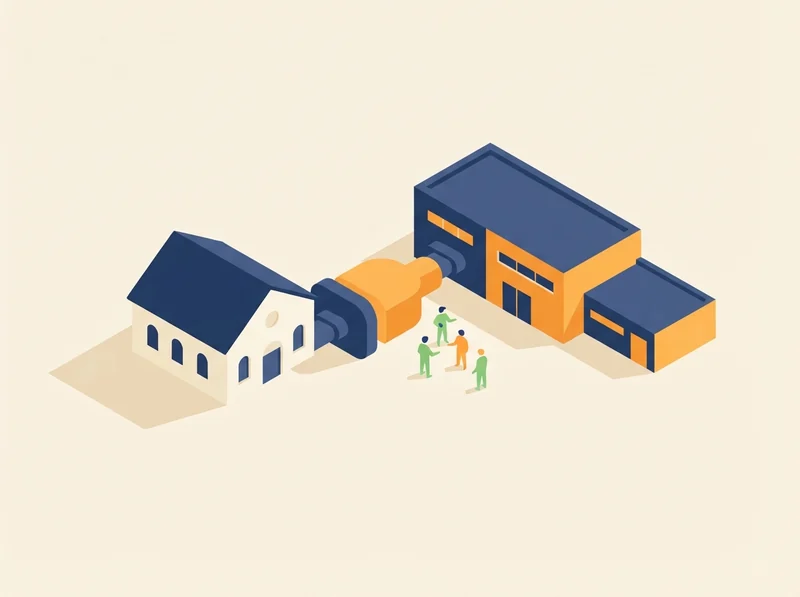
Conflict assessment
Before anything is convened, we interview the parties confidentially and map who is involved, what they actually want, and — most importantly — which disagreements are about facts and which are about values. The output is a written assessment of whether a collaborative process is even feasible, and on what questions.
This step gets skipped constantly, and skipping it is how engagements fail. A values dispute wearing a technical costume cannot be solved with better technical work.
Listening and stakeholder mapping
We find out what this community’s history is, how it describes itself, what it wants to still be true in ten years, and who its residents would actually trust to tell them the truth about a project. That last group is rarely the people at the microphone, and the research on public comment is unambiguous: commenters are older, far more likely to be homeowners, and skew heavily toward opposition compared to the electorate they’re drawn from. Comment volume is not public opinion, and we will never report it to a client as though it were.
Where a client needs to know what the affected public actually thinks, we use an instrument that can answer that — a representative survey, a randomly selected panel, a citizens’ jury — and report it separately from what we heard in the room.
Meeting and process design
We design and facilitate sessions built to produce information rather than a transcript. That usually means replacing the open-microphone hearing with facilitated small groups, structured question sequences, and formats matched to the decision at hand.
We are explicit at the start of every session about which decisions are genuinely open and which are already closed, and why. Implying influence that doesn’t exist is worse than holding no meeting at all.
Joint fact-finding
Duelling experts destroy information rather than creating it. Every siting fight where each side commissions its own study ends with two studies nobody believes.
The alternative is a process where the parties jointly scope the questions, jointly select the experts, and agree on methods before any results exist. Pre-committing to a method that could produce an unwelcome answer is what makes the answer binding. Where the parties still disagree on interpretation, we document the disagreement rather than paper over it.
Translating claims into project-specific questions
Almost nothing about data centers generalizes. The same 200 MW campus produces wildly different water, noise, fiscal and ratepayer outcomes depending on cooling design, tax rate, tariff, grid region, and distance to the nearest bedroom window. Both sides trade in national averages precisely because national averages obscure this.
Our highest-value move in most rooms is turning a general claim into a question with an answer. Not "do data centers use too much water," but "what is this facility’s contractually committed water use, as a percentage of this utility’s permitted capacity and summer peak-day production?"
Correcting the record — in both directions
We maintain a published, dated log of claims examined, with findings and sources. Corrections that cut against the developer and corrections that cut against opponents appear on the same page, in the same format.
We are neutral on whether a project should be approved. We are not neutral on whether a claim is true. A facilitator who treats a four-million-gallon figure and a forty-thousand-gallon figure as two equally valid perspectives isn’t being neutral — they’re being unhelpful.
Turning commitments into enforceable terms
A promise that can’t be enforced is worse than no promise, because the day it’s broken it costs more than it ever bought.
We help parties convert intentions into terms with numbers, verification methods and consequences attached: contingent commitments that specify what happens if a threshold is exceeded, financial security rather than assurances, obligations that bind successor owners, clawbacks tied to measurable milestones, and post-construction verification as a condition rather than an aspiration. We strike "reasonably," "where feasible" and "best efforts" from every draft we touch. Each of those words is a defense.
Monitoring and follow-through
The years after approval are where trust is actually won or lost. We help establish annual public reporting, compliance dashboards, renegotiation triggers, and dispute processes that exist before anyone needs them.
Capacity support where it’s thin
A standard part of the work includes providing plain-language materials, technical assistance, help identifying and equipping trusted local messengers, and pressing for developer-funded independent technical review as a condition of approval. That is not a departure from neutrality. It is what neutrality requires when communities lack capacity.
Start a conversation
Tell us where the project is, who is involved, and what stage it has reached. A short conversation is usually enough to work out whether this is the kind of thing we do.
info@commonwatts.com